

Your baby is spending 80% of their time asleep and dreaming. Under their skin, the fat layer is getting thicker and they can now regulate their own body temperature. They will triple in weight in your final trimester with half of your weight gain going directly to baby.
Your baby’s developmentBaby as big as a pumpkin

Your baby’s development
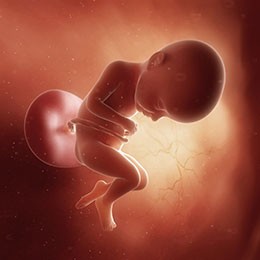
Your baby is now about 42cm long and weighs around 1.6kg.
At this stage, three out of four babies will have moved into the head-down position, with the remaining quarter catching up. If your baby is still in a bottom-down position, it is usually a temporary position during your third trimester. Only 3-4% of babies are born breech (feet or bottom first).
At this stage your baby’s lungs and digestive tract are still immature; however the rest of your baby’s systems should be well developed.
When your baby’s awake, they will be doing a lot of things that a newborn would. They will grasp at their feet and suck their thumb. Eyelashes, eyebrows and hair on your baby’s head are now evident. They will also make lots of facial expressions. By now, you’re probably intrigued to see what they look like.
Your Body
You may notice the muscles in your uterus tightening now and then. Many women feel these mild, mock contractions, called Braxton Hicks, the closer they get to labour, especially if it’s a second or subsequent baby. They can also occur more frequently if you are dehydrated, so remember to drink plenty of fluids throughout the day.
Sciatica is another common complaint during this late stage of pregnancy. It’s usually due to the fact that your baby is lying at an angle, which traps the sciatic nerve. You may feel a shooting pain in your lower back, at the back of your thigh and down the back of your leg to your foot. Try sitting cross-legged on the floor, or use a fitness ball instead of a chair. If it’s painful to sit, use a pillow to support the small of your back, or simply lie down. Sleeping on your left side can help. This allows for better blood flow as the main vein which links your lower body to your heart is located to the right of your spine. Lying on your left means that your baby won’t be pressing on it as much. You can also try a hot or cold pack to soothe your back pain, and sleeping with a pillow under your baby-bump may help relieve some of the discomfort.
Want to know more? Call us on 1800 842 098 or Live Chat now.
Please note: These pregnancy week-by-week articles, are meant to give you a general sense of the growth and development going on within you. However, it’s important to remember that every baby develops differently, even during pregnancy.
Related Articles


© Nutricia 2025